Google Antigravity: The First Agent-First IDE
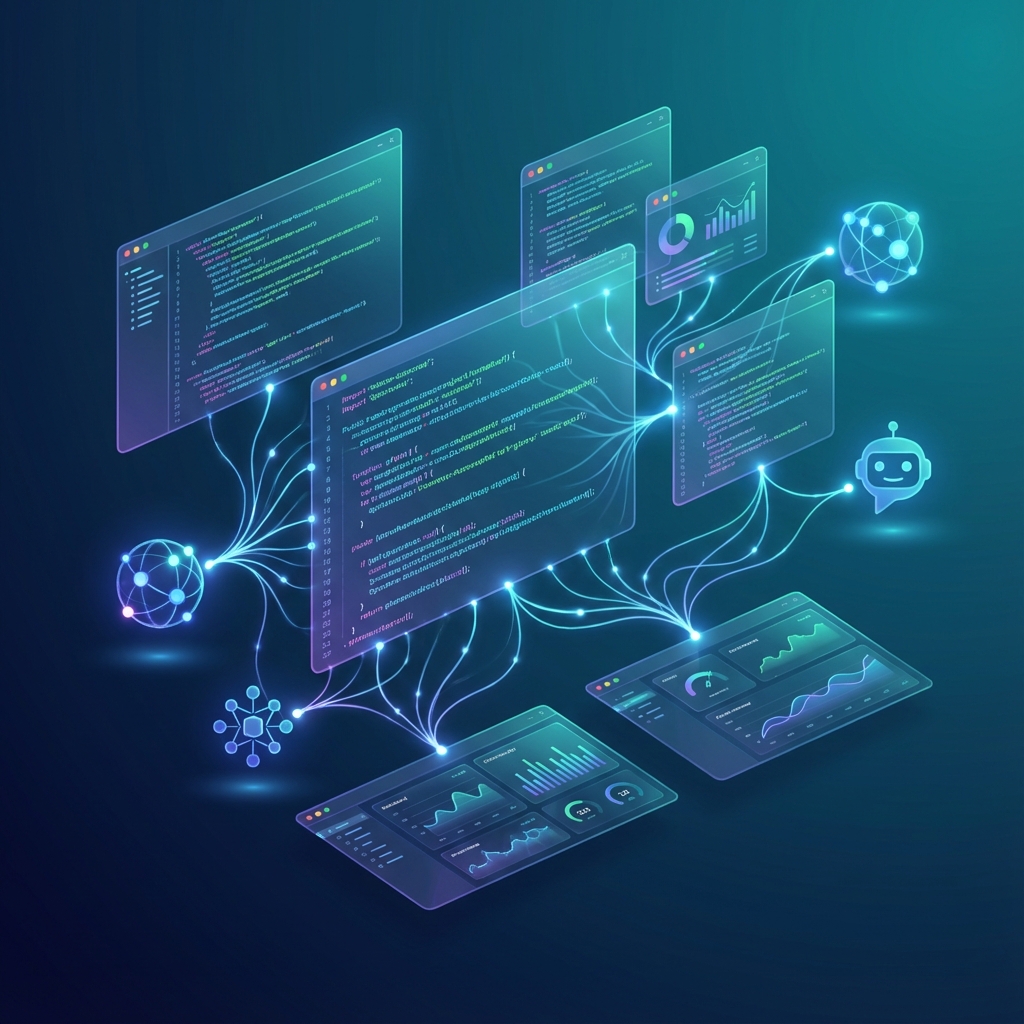
The AI coding landscape has been heating up. Cursor pioneered the AI-native code editor experience, while OpenAI Codex became accessible directly in VS Code for Pro subscribers. Now, Google has officially entered the arena with a product that aims to redefine what an IDE can be.
Antigravity isn't just another AI-assisted code editor—it's Google's direct answer to the competition, and the first truly agent-first integrated development environment.
What Makes Antigravity Different?
Traditional AI coding assistants work with you, offering suggestions and completions. Antigravity flips this paradigm: AI agents work for you, autonomously planning, executing, and verifying entire development tasks.
Powered by Gemini 3 Pro
At its core, Antigravity runs on Google's latest Gemini 3 Pro model, optimized for:
- Code reasoning and understanding
- Large context comprehension
- Multi-step planning and execution
But here's the interesting part: Antigravity isn't locked to Google's models. It supports Anthropic's Claude Sonnet 4.5 and Opus 4.5, along with open-source variants of OpenAI models.
Two Primary Views
Antigravity introduces a unique dual-view interface:
Editor View
A familiar IDE experience built on Visual Studio Code's foundation. If you've used VS Code, you'll feel right at home.
Manager View (Mission Control)
This is where things get interesting. The Manager view acts as a control center for orchestrating multiple agents working in parallel across different workspaces.
Think of it as mission control for your codebase. You can:
- Dispatch agents to work on different features simultaneously
- Monitor their progress in real-time
- Review and approve their changes asynchronously
Multi-Surface Integration
Unlike traditional AI assistants that only interact with your code, Antigravity agents have direct access to:
- Code Editor: Real-time editing and refactoring
- Terminal: Running commands, installing dependencies, executing tests
- Browser: Testing web applications, taking screenshots, verifying UI
This end-to-end integration means agents can complete entire development workflows autonomously.
The Artifacts System
Trust is critical when delegating tasks to AI. Antigravity addresses this with an Artifacts system that generates:
- Human-readable implementation plans
- Task breakdowns and checklists
- Screenshots and browser recordings
- Verification reports
Every action the agent takes is documented and reviewable, giving developers full visibility into the AI's decision-making process.
Free and Cross-Platform
Antigravity launched in public preview on November 18, 2025, and is available free of charge for Windows, macOS, and Linux. Google provides generous rate limits for Gemini 3 Pro usage, making it accessible for individual developers and small teams.
Our Take
With Cursor already reshaping how developers interact with AI, and OpenAI Codex integrating directly into VS Code, Google's entry into the space signals that AI-powered IDEs are becoming the new standard.
Antigravity stands out with its agent-first approach—while Cursor excels at AI-assisted coding and Codex offers powerful completions, Antigravity pushes further into autonomous territory. The Manager view alone represents a paradigm shift: orchestrating multiple AI agents simultaneously is something we haven't seen at this level before.
As a studio that works daily with cutting-edge AI tools, we see this as a significant milestone. The competition between these platforms will only accelerate innovation, and ultimately, developers are the ones who benefit.

Want to leverage autonomous AI agents for your next project? Let's talk.
More from the Research Lab

Agent Nyla: The First Solana App on Instagram
Agent Nyla made history as the first Solana-powered app to integrate with Instagram. We helped the team build their complete web suite.
Claude Opus 4.5: The New Benchmark for Intelligent Systems
An in-depth technical analysis of Anthropic's Claude Opus 4.5. We explore its architectural breakthroughs, including the new 'Effort' parameter, 200k context window, and 80.9% SWE-bench score.